Engineering High-Speed Banked Velodromes and Smooth Asphalt Cycle Paths Built to Union Cycliste Internationale Parameters.
Cycling has experienced a global renaissance, serving as an eco-friendly transport mode, a popular fitness routine, and a competitive Olympic discipline.
Elite International Sports is a premier developer of **cycling tracks and velodromes**. Working in alignment with the **Union Cycliste Internationale (UCI) standards** and regional urban mobility planning codes, we engineer high-performance cycling facilities. We deliver solutions for outdoor community cycling greenways, university sports campuses, municipal training fields, and high-speed banked velodromes.
From a sports engineering perspective, cycling track design is governed by friction mechanics and surface smoothness. Unlike multi-sport fields, cycle tracks are subjected to concentrated, high-pressure tire contacts. The surface must have low rolling resistance to minimize cyclist energy expenditure while offering high grip to prevent slips during fast turns and wet weather.
Our team manages the complete cycle of construction: from advanced banking angle calculations and laser-controlled asphalt paving to polymer-modified protective resin applications, concrete sealing, and precise line markers.
Velodromes and high-speed tracks require complex geometric calculations to account for centrifugal force. Safe design of banked curves is critical to accommodate speeds exceeding 70 km/h.
Our polymer-modified asphalt surfaces are finished to eliminate micro-grooves, reducing tire friction and helping riders maintain speed.
For competitive velodromes, banking angles of 12° to 45° are engineered into concrete bases to match curve radius and racing speeds.
High-stability binders prevent tire indentation or rutting under heavy bicycle wheel traffic in extreme summer heat.
Custom cross-slopes and catch basins drain surface water quickly, preventing hydroplaning risks.
We construct four primary categories of cycle tracks and velodromes:
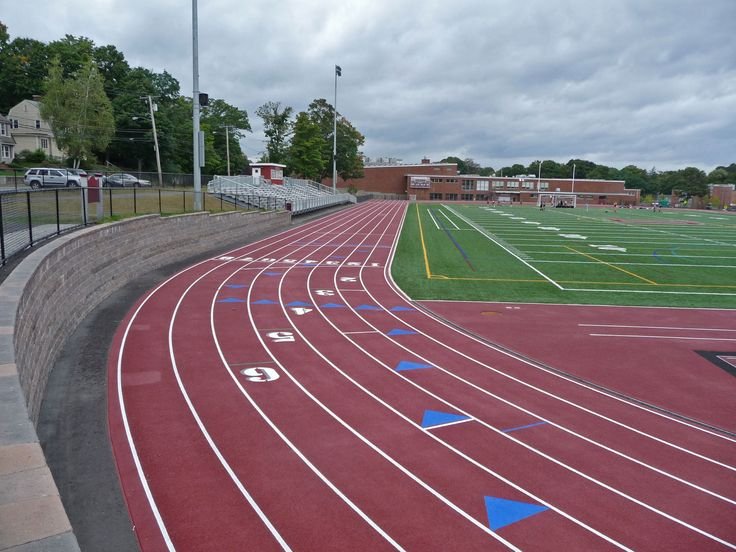
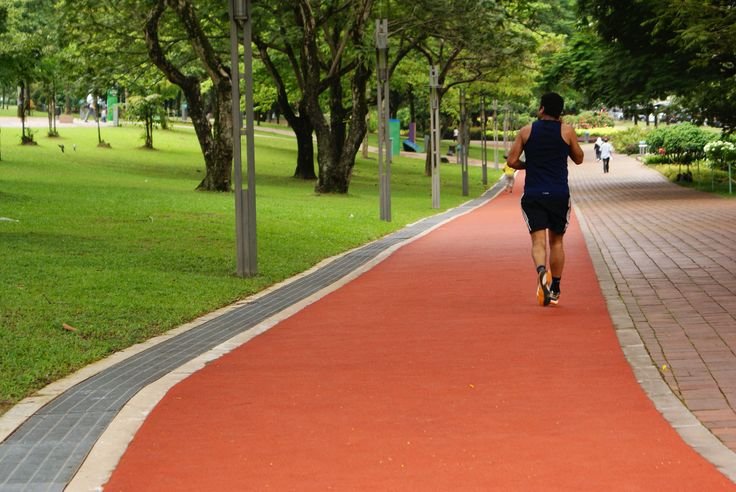
The most popular choice for outdoor parks and greenways. Utilizes a dense, fine-grade asphalt wearing course paved over crushed aggregates. Offers high durability and simple upkeep.
Designed for high-speed track racing. Constructed from reinforced concrete slabs cast with precise banking control templates. Coated with anti-skid acrylic resins.
The gold standard for indoor arenas. Utilizes premium Siberian spruce or kiln-dried plywood slats mounted on sprung wood sub-frames, providing the ultimate racing speeds.
Engineered dirt tracks with rollers and banked turns for BMX and mountain bikes. Made from cohesive soil-gravel mixes, compacted with vibrating plates.
Building a banked velodrome or a cycle track requires exact grading controls to ensure joint smoothness and drainage function:
Soil compaction testing. Grading the track sub-base to establish standard cross-slopes and banking profiles.
Spreading a non-woven geotextile lining sheet, followed by laying coarse stone and fine aggregate gravel bases, compacted using rollers.
For concrete velodromes, casting concrete formwork and installing reinforcing steel grids to support banked curvatures.
Pouring M30 concrete slabs or paving hot-mix asphalt in two separate courses (base course and fine wearing course) using paving machines.
Allowing the concrete/asphalt to cure. Diamond-grinding joints to eliminate bumps and level mismatches.
Applying an anti-slip primer followed by UV-stable acrylic or polyurethane colored coatings to seal concrete surfaces.
Painting starting lines, pursuit lines, and lane borders using laser tracking guides, followed by official inspections.
Asphalt binders modified with elastomeric polymers to resist thermal cracking and tire rutting.
High-density concrete reinforced with steel rebar and synthetic fibers to resist banking loads.
Anti-glare textured coatings formulated with silica sand to provide slip resistance.
Premium, knot-free timber slats engineered for high stability and indoor velodrome speed.
Graded gravel and stone soling layers to form a stable base beneath the concrete slab.
Perforated drain pipes placed beneath banking courses to prevent structural water damage.
Dedicated tracks keep cyclists separated from heavy motor traffic, reducing accidents.
Uniform surfaces and curved banking support safe, high-speed training and racing.
High-stability binders maintain flatness across extreme summer and monsoon cycles.
| Governing Standards Compliance | UCI (Union Cycliste Internationale) Guidelines |
| Standard Velodrome Length | 250 meters (Competition Standard) / 333.3 meters |
| Velodrome banking Angle | Up to 45° curves / 12° straightaways |
| Surface Flatness Tolerance | < 3mm deviation under a 3-meter straight edge |
| Cycle Path Width | 2.5 meters (Single Lane) / 4.0 meters (Dual Lane) |
| Asphalt Sub-base | 100mm compacted SBR stone base + 50mm fine asphalt course |
| Friction Co-efficient | > 0.6 (under wet playing conditions) |
| Estimated Product Lifetime | 15 to 20 Years (concrete velodromes and asphalt paths) |
| Warranty Coverage | 10 Year Structural Installation Warranty |
We use advanced CAD modeling and structural design software to engineer stable banking curves.
Our paving fleet utilizes electronic levelling beams to achieve ultra-smooth asphalt wear courses.
We manage the full cycle of cycle track construction, including subgrade civil work and lighting systems.
All competitive velodromes are constructed in strict alignment with international racing standards.

Banked Polymer-Modified Asphalt Cycling Track Engineering
Submit details about your institution's field dimensions. Our engineers prepare preliminary drainage plans and BOQ estimates.
Get technical layouts, base-foundation designs, and comprehensive costing sheets prepared by our expert sports engineers.