Precision Engineering of High-Clay Natural Wickets, Hybrid Pitches, and Concrete Astro Turf Surfaces.
In the game of cricket, the pitch is the single most critical factor dictating play, determining the balance between batsman and bowler.
Elite International Sports is India's leading specialist in **cricket pitch construction**. In strict compliance with the **International Cricket Council (ICC) regulations**, we construct high-performance natural turf wickets (clay pitches), hybrid wickets, and synthetic turf pitches on concrete bases for international stadiums, academies, university grounds, and school networks.
From a sports agronomy perspective, a natural turf wicket relies on soil compaction and clay binding index. We select specialized **black cotton clay soil** containing a clay mineral composition exceeding 30% to 35%, ensuring high plasticity and shrinkage binding when rolled. This high-density clay foundation is layered, watered, compacted, and planted with premium **Bermuda Selection-1 grass**. It is then rolled with heavy rollers to achieve a hard finish that delivers true ball bounce, consistent pace, and resistance against spikes.
Whether laying a professional stadium multi-pitch block, or installing high-durability synthetic pitches for intensive academy practice, our engineering team manages the complete project layout. We handle excavation, curb-wall casting, base aggregate filtration, clay soil blending, sodding, rolling, and moisture calibration.
The pace, bounce, and spin characteristics of a wicket depend on clay mineral types, compaction densities, and moisture management during pre-match rolling.
Our selected black cotton clay soils exhibit high binding index parameters, drying into a solid block to prevent surface crumbling.
Controlled moisture levels during rolling are critical; too dry creates dust, while too wet results in soft wickets with slow ball roll.
We utilize heavy 1-ton and 2-ton rollers in a calibrated sequence to consolidate clay layers and achieve high density.
A fine-blade natural grass variety characterized by dense root systems that help bind the clay wear course.
We install four types of cricket pitches depending on competitive standards and training configurations:
The gold standard for tournaments. Utilizes layered high-clay black cotton soil planted with natural Bermuda grass, rolled to a hard finish. Offers spin, seam, and bounce.
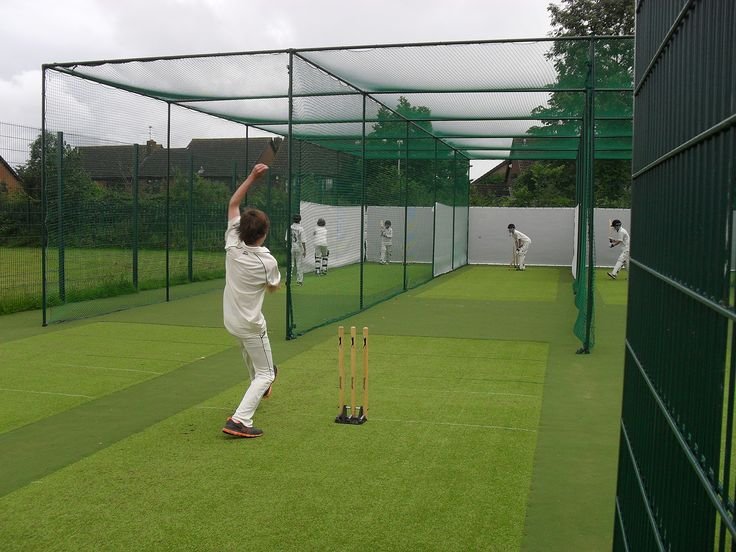
A high-density synthetic grass carpet (12-15mm thick) laid over concrete bases. Offers true bounce, is completely weather-resistant, and requires no watering or rolling. Preferred for school practice.
Integrates natural clay bases stitched with vertical synthetic fibers (up to 5% of total cover). The fibers protect natural grass roots, allowing 3x more playing hours than natural wickets.
Heavy concrete slabs topped with premium synthetic turf. Extremely durable and weather-resistant, ideal for community practice cages.
Building a natural turf wicket requires multi-layered clay paving to prevent cracking:
Positioning the pitch along a North-South axis. Excavating the pitch table area to a depth of 300mm.
Installing brick borders or concrete curb stones along both sides of the path to hold the gravel and clay layers.
Laying a 100mm coarse gravel base course followed by a 50mm fine aggregate layer to drain filtered water.
Spreading black cotton clay soil in three 75mm courses. Each course is watered and compacted to form a dense base block.
Laying pre-cultivated Bermuda Selection-1 grass sods over the top clay course, rolled for flat surface contact.
Watering, fertilizing, and mowing the turf grass, followed by heavy rolling to compact the playing surface.
Measuring and painting official creases (popping crease, bowling crease, return crease) using white compound paint, followed by a final inspection.
Premium high-binding black cotton clay soil (organic clay content > 30%) for turf wickets.
Virgin Selection-1 Bermuda grass sods or sprigs to form a dense rootzone layer.
Graded granite stones (10-20mm size) used for the sub-surface drainage blanket.
Washed, graded silica sand (0.25-0.5mm grain size) to prevent clay from mixing with the gravel base.
Pre-cast concrete bricks or blocks to build border walls, containing the clay courses.
Polyethylene synthetic grass carpet (12-15mm thick) with backing sheets for synthetic pitches.
Compacted clay bases deliver consistent ball speed and vertical bounce.
Solid clay block structures resist bowler footwear impacts, preventing crumbling.
Underlayment gravel drainage bases prevent structural waterlogging.
| Governing Standards Compliance | ICC (International Cricket Council) Pitch Rules |
| Official Pitch Length | 22 yards / 20.12 meters (from stumps to stumps) |
| Total Pitch Width | 10 feet / 3.05 meters (plus safety runoff margins) |
| Clay Wear Course Soil | Black cotton clay soil (organic clay content > 30%) |
| Linear Soil Shrinkage | Within 10% to 15% limits (to prevent surface cracking) |
| Grass Turf Variety | Bermuda Selection-1 / Cynodon dactylon sprigs |
| Grass Mowing Height | 2mm to 4mm (Match Preparation Standard) |
| Estimated Product Lifetime | Indefinite (with proper agronomic maintenance) |
| Warranty Coverage | 3 Year Structural Installation Warranty |
We test clay soil binding index and linear shrinkage in laboratories prior to ground mobilization.
Our structured layering prevents deep surface cracking during dry hot weather cycles.
We use laser levels to ensure wicket stumps are completely centered and aligned along a North-South axis.
We supply premium pitch rollers, covers, and grass sods under comprehensive service contracts.

Consolidated Clay Base Natural Turf Pitch Construction
Submit details about your institution's field dimensions. Our engineers prepare preliminary drainage plans and BOQ estimates.
Get technical layouts, base-foundation designs, and comprehensive costing sheets prepared by our expert sports engineers.