Engineering 3G Monofilament Grass Systems, Compacted Silica-Rubber Infills, and High-Drainage Sub-Bases.
Natural grass football pitches are highly susceptible to wear and tear. Heavy match schedules, combined with rain or extreme summer heat, can quickly turn a green field into a mud pit or a dust field.
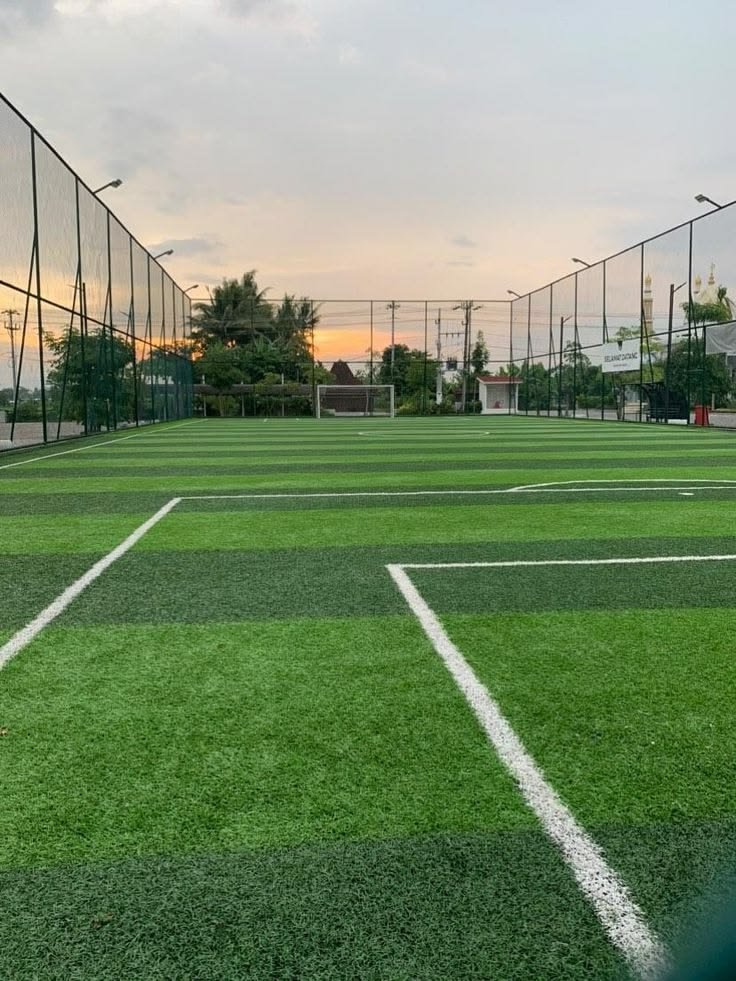
Elite International Sports is a premier sports infrastructure developer, specialized in **FIFA-compliant artificial turf field construction**. Working in strict adherence to the **FIFA Quality Programme for Football Turf**, we construct turnkey synthetic football pitches and multi-sport turf arenas for school fields, sports academies, municipal stadiums, and private commercial rental centers.
From a sports engineering perspective, a synthetic field must match the playing characteristics of natural grass. Our 3G (Third Generation) turf systems utilize high-Dtex polyethylene monofilament fibers (typically 40mm to 60mm pile height), partially infilled with round silica sand and elastic SBR or organic rubber granules. This composition provides excellent ball roll distance, natural vertical ball rebound, and optimal shoe traction to prevent cleats from locking.
We manage the complete lifecycle of turf field construction. Our team handles advanced site survey and soil load-bearing compaction, sub-surface herringbone drainage installation, crushed aggregate base layering, concrete perimeter edge curb casting, turf roll laying, seam bonding, and infill spreading.
Our synthetic turf systems are configured to prioritize player safety and all-weather playability. The base is engineered to withstand tropical downpours without drainage back-up.
The sand-and-rubber infill supports the fiber base while allowing the player's boot studs to penetrate and slide naturally, minimizing knee strain.
Perforated backing sheets and stone aggregate bases allow water to filter at rates exceeding 180mm per hour, preventing mud build-up.
Polyethylene blades are UV-stabilized, resisting splitting, degradation, and fading in surface temperatures up to 60°C.
Prefabricated shock pads or SBR rubber crumb infill courses provide calibrated shock absorption, reducing impact strain.
We install three primary types of artificial turf depending on usage frequency and playing standards:
Features individual, structured grass blades. Highly realistic, offering the closest performance to natural grass. It uses a sand-and-rubber infill and is the official standard for FIFA tournaments.
Features wider, slit-film fibers that split into mesh-like blades over time. Holds the sand-and-rubber infill securely in place, making it ideal for community parks and schools.
Uses extremely dense, texturized fibers that stand upright without requiring sand or rubber infill. Low maintenance, ideal for indoor cages and multi-sport courts.
Weave synthetic grass fibers directly into a natural grass rootzone. Reinforces the natural turf turf blades, allowing 3x more playing hours than standard grass.
Building a football field requires robust subgrade containment and aggregate consolidation to prevent surface unevenness:
Excavating the field profile to 250mm depth. Compacting the subgrade soil with heavy rollers to establish drainage slopes.
Digging drainage trenches in a herringbone pattern, laying perforated HDPE drainage pipes, and wrapping them in geotextile sheets.
Laying a coarse stone base (100mm-150mm) followed by a fine gravel layer (50mm), compacted to achieve a flat sub-base surface.
Casting concrete curb walls along the pitch boundaries to anchor the turf edges and contain the gravel bases.
Unrolling the synthetic turf carpet, gluing seams with high-tensile PU adhesives, and inserting line markings.
Spreading washed silica sand, brushing it into the carpet, followed by applying the SBR rubber crumb infill layer.
Testing ball rebound, ball roll, and force reduction. The completed field is certified and handed over.
UV-stabilized Polyethylene monofilament yarns (8,800 to 12,000 Dtex) structured for durability.
Recycled SBR rubber crumbs (1-3mm size) to provide elastic cushioning and impact safety.
Round-grain silica sand (99% pure) to support the turf fibers without cutting the backing.
Two-component polyurethane seam adhesives to secure joints and line markings.
Permeable non-woven fabric to separate subgrade soil from stone gravel layers.
Crushed granite aggregates (20-40mm and 6-10mm) to form a high-permeability base.
Resilient synthetic fibers do not require rest periods, allowing constant play.
Unlike natural grass, synthetic turf does not require daily irrigation, reducing operational costs.
Calibrated sand-and-rubber infills absorb impact forces, protecting player joints.
| Playing Standard Compliance | FIFA Quality / Quality Programme Standards |
| Turf Pile Height | 40mm to 60mm (standard monofilament or fibrillated) |
| Fiber Composition | Polyethylene (PE) - UV-Stabilized |
| Tuft Gauge | 5/8 inch or 3/4 inch |
| Infill Material Ratio | 15-20kg Silica Sand + 8-12kg SBR Rubber per sq. meter |
| Drainage Rate | > 180mm / hour |
| Expected Lifespan | 8 to 12 Years (under standard maintenance) |
| Warranty Coverage | 8 Year Comprehensive Installation Warranty |
We use only certified synthetic turf carpets and infills that meet international competition standards.
Our engineering team designs custom herringbone drainage networks to prevent water retention issues.
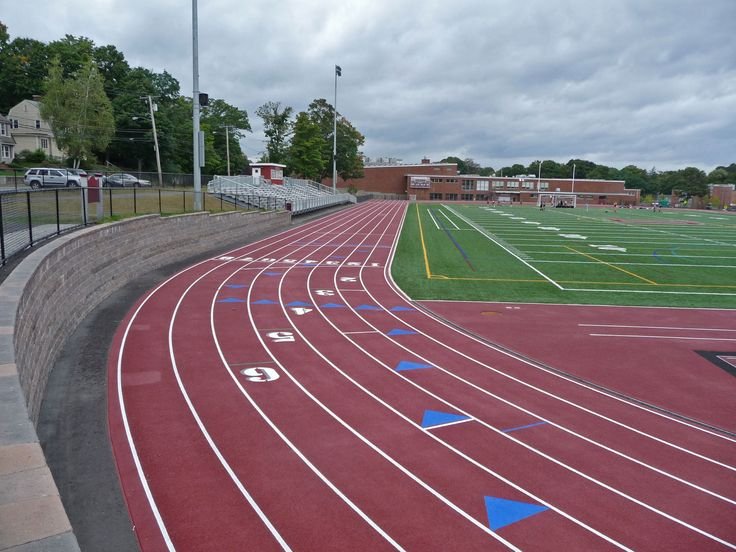
We manage the full cycle of cycle track construction, including subgrade civil work and lighting systems.
Our service team handles periodic infill replenishment and surface grooming under AMC contracts.

FIFA Quality Pro 3G Synthetic Turf Field Installation
Submit details about your institution's field dimensions. Our engineers prepare preliminary drainage plans and BOQ estimates.
Get technical layouts, base-foundation designs, and comprehensive costing sheets prepared by our expert sports engineers.