High-Performance Shock-Absorbing Timber Decks with Ultra-Grip Finishes
We design and construct premium indoor squash court wooden flooring compliant with World Squash Federation (WSF) requirements. Utilizing premium hard maple boards and floating, area-elastic subfloor cushion systems, we ensure consistent ball bounce, high force reduction, and non-slip traction for explosive movements.
Squash is a high-speed racket sport requiring intense, continuous lunging, pivoting, and leaping in a confined, high-walled space.
Because players constantly hit and push off the surface, a squash court floor must be engineered to prevent injuries. Standard concrete or rigid floors transfer landing impacts directly back to the athlete's legs, causing muscle soreness, shin splints, and joint fatigue. A professional squash court uses a sprung wood flooring system to absorb these forces and provide a safe, stable surface.
Elite International Sports builds high-end squash court floors from sustainably sourced North American Maple or premium European Oak. Kiln-dried to strict moisture standards, these timbers resist shifting and splintering under heavy, high-speed play. Our installations are designed to meet World Squash Federation (WSF) requirements, supporting tournament play at sports academies, fitness clubs, and university training complexes.
Beyond player safety, the design ensures a uniform surface response. There are no dead spots on the court, ensuring predictable ball rebound and dependable foot traction. With a durable floating subfloor, dampness-sealed base, and excellent sound isolation, our systems are built for long-term, high-intensity play.
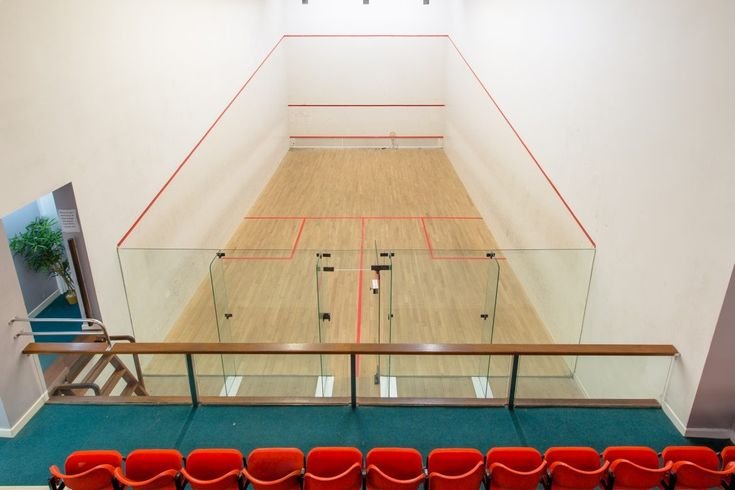
Kiln-dried maple boards laid over a specialized floating subfloor system designed for squash.
Indoor sports flooring is a highly specialized mechanical system engineered to act as an interface between the athlete and the rigid concrete sub-base, optimizing safety, energy return, and sports-specific physics.
Unlike standard floors, which are designed solely for load-bearing stability, sports flooring is engineered for biomechanical interaction. This is achieved by combining surface material properties with advanced subfloor mechanical designs. The goal is to manage area elasticity—where the floor system bends slightly over a wide area when an athlete lands.
The core engineering lies in the shock-absorption sub-structure. We use elastomeric rubber pads beneath a double-layered plywood deck or pine wood sleeper system. When a player jumps, their downward force is absorbed by the flexing wood and the compression of the rubber pads. This prevents the impact energy from transferring back into the athlete's joints.
Furthermore, the surface coating must balance traction and slide. A player must have enough grip to prevent slips during fast changes of direction, but not so much that their shoes stick, which can twist knees and strain ligaments. We apply specialized, non-glare, anti-skid polyurethane seals that meet the European Standard EN 14904 for sliding coefficient (friction values between 80 and 110).
Investing in a premium WSF-standard wooden flooring system ensures player safety, long-lasting durability, and low lifecycle maintenance costs.
Delivers 55% to 65% shock absorption. This reduces shock transmission through the legs, preventing muscle fatigue, shin splints, and joint trauma during long play.
Kiln-dried solid Maple boards feature a clean, bright appearance with tight grain lines. This looks highly professional and helps players track the ball against the floor.
With a wear-layer of solid timber, our courts can be sanded, resealed, and repainted 5 to 7 times. This gives the installation a lifespan of over 25 to 30 years under normal use.
We supply and install a range of wooden sports floor designs tailored to different budgets, subfloor moisture levels, and performance needs.
The gold standard for tournament play. Kiln-dried North American Hard Maple boards are laid over a floating resilient subfloor. Maple features exceptional hardness (1450 Janka rating) and a close grain structure that prevents splintering under high impact. Recommended for professional clubs, tournament complexes, and university indoor courts.
Constructed with a premium hardwood wear layer bonded to a multi-ply cross-laminated timber base. This cross-lamination prevents warping, expansion, and contraction during relative humidity shifts. Recommended for indoor spaces that experience moisture variations or lack continuous climate control.
This design is not anchored directly to the concrete base. Instead, it rests on a double-layer plywood layout separated by elastomeric cushion pads. This maximizes area elasticity and provides uniform shock absorption across the court surface.
A high-end system that balances shock absorption, ball rebound, and rolling load capacity. Using custom battens and dual shock pads, it meets all international tournament and multi-sport standards.
A high-performance sports floor is a multi-layered structure, not just a simple layer of wood. Every layer is carefully chosen to manage load distribution, prevent moisture damage, and absorb impact.
We manage the entire construction process from site inspection to final handover, ensuring every step meets our strict quality standards.
We assess the sub-base, checking for structural cracks, dust issues, and overall access to the site.
We align the system design with WSF standards and coordinate layout planning with the client's needs.
We check the floor level using digital levels. The sub-floor must not deviate by more than 3mm over a 3-meter span.
We measure concrete moisture levels using a calcium chloride test. The reading must be below 3% to prevent warping.
We clean the subfloor, grind down high spots, fill low spots with epoxy mortar, and seal it to prevent dust.
We lay down the moisture-proof membrane and install the resilient rubber shock pads at exact, engineered intervals.
We install the double plywood deck, then blind-nail the solid maple boards using specialized pneumatic nailers.
We sand the wood with fine-grit drum sanders, vacuum the dust, and apply three coats of sports polyurethane.
We lay out the court boundaries using WSF regulations (50mm line width) and paint them with WSF-approved polyurethane ink.
We verify shock absorption, bounce consistency, and surface friction using standard testing equipment.
We conduct a walk-through with the client to check the final finish, leveling, and perimeter details.
We hand over the court along with documentation, maintenance guides, and warranty certificates.
We select and import high-grade materials to ensure the structural stability and safety of our sports installations.
Imported North American Maple, kiln-dried to 8%-12% moisture. Features high shock resistance and a bright color that makes the ball easy to see.
12mm thick, exterior-grade pine plywood sheets. Laid in cross-layers to distribute loads evenly and prevent subfloor creaks.
10mm thick, high-resilience rubber pads. Features excellent compression-recovery properties that absorb impact and protect joints.
WSF-approved, solvent-based polyurethane coating. Provides wear resistance, UV protection, and consistent sliding friction.
200-micron thick polyethylene sheet laid beneath the subfloor. Prevents rising subgrade moisture from warping the wood.
Preservative-treated pine wood runners. Elevates the plywood subfloor, creating an air cavity that helps prevent decay.
Below is the technical data sheet for our WSF-compliant squash wooden flooring system.
| Parameter | Value / Specification | Standards Compliance |
|---|---|---|
| Total System Thickness | 85mm to 100mm (Standard configuration) | DIN 18032-2 |
| Hardwood Board Profile | 22mm thick, 57mm width, tongue-and-groove | North American Maple Grade 1 / 2 |
| Shock Absorption (Force Reduction) | 60% to 65% | EN 14904 Class A4 compliant |
| Vertical Deformation | 2.5mm to 3.2mm | EN 14904 (Requires 2.3mm - 5.0mm) |
| Slip Resistance (Friction) | 90 to 110 (Dry conditions) | EN 13036-4 (Friction 80-110) |
| Ball Rebound Rating | 94% to 97% | EN 12235 (Minimum 90% required) |
| Rolling Load Capacity | 1500 N (Minimum) | EN 1569 compliant |
| Fire Behavior Rating | Cfl-S1 (Flame retardant) | EN 13501-1 |
| Expected Service Life | 25 to 30 Years (With proper maintenance) | Residential & Commercial Sports rating |
| System Warranty | 5 Years Comprehensive warranty | Standard project guidelines |
The sprung timber base absorbs energy, reducing joint stress and preventing fatigue during long training sessions.
The double-ply distribution deck prevents soft spots, giving players consistent bounce and footing everywhere on the court.
The specialized finish balances slide and grip, preventing slips while allowing safe, fast lunges.
Our subfloor design isolates vibration, reducing echo and background noise in large sports halls.
The smooth hardwood surface resists dirt and can be quickly cleaned with daily sweeping and damp mopping.
We use FSC-certified timber and low-VOC polyurethane coatings to support better indoor air quality.
Our WSF-standard wooden flooring is used across a variety of sports infrastructure sectors.
Elite competition requires strict compliance with international standards. Our squash wooden flooring is designed to meet the strict criteria of the **World Squash Federation (WSF)** and **European Standard EN 14904**.
WSF certification sets standards for ball rebound, floor leveling, sliding coefficient, and overall court dimensions. Key parameters ensure that the floor provides enough grip while protecting players from joint fatigue.
By using third-party tested subfloors and polyurethane topcoats, our systems conform to EN 14904 requirements for area-elastic sports flooring, ensuring a high-performance, tournament-ready playing surface.
Our elastic subfloor structure dampens muscle vibrations on impact. This helps players save energy, reduce muscle fatigue, and stay productive during long matches.
The surface is finished with professional-grade polyurethane slip coats, offering a uniform coefficient of friction across the entire layout to support fast, confident lunges.
Following a standard maintenance routine preserves the finish and keeps the wood structurally stable for decades.
Sweep the floor daily with a clean, static-free dust mop to remove sand and grit, which can scratch the polyurethane finish.
Damp-mop the floor weekly with warm water and a neutral pH floor cleaner. Avoid harsh detergents or scrubbing tools that can dull the shine.
Depending on use, we recommend sanding and resealing the surface every 5 to 7 years to restore traction and protect the wood.
Our engineers bring over 15 years of experience in wood moisture management and court subfloor construction.
We import solid Maple and Oak boards directly from sustainably managed forests in Europe and North America.
We maintain local installation teams across India, enabling fast response times and dependable maintenance support.
We analyze local climate data and test subfloor moisture to select the best wood grade and installation system for the location.
Our certified team installs the subfloor moisture seals and lays the maple boards with precise expansion joints.
We sand, apply the WSF-approved finish, paint the lines, and hand over the court along with maintenance documentation.
Engineered for safety, performance, durability, and international sports standards.